10/12 in our series on police MISPER searches
As we have seen in this article series, the Search-PRAS software excels at rapidly planning out missing person search operations and briefing search teams. But what happens when a missing person search isn’t resolved quickly and the case grows more complex?
Fortunately, a great many missing person searches are simple and resolved relatively quickly. Indeed, the Search-PRAS software is a critical tool in helping to ensure that the majority of searches are contained within the “quick and simple” category, not least because it allows rapid, data-driven planning and action and the compression of critical timelines. This empowers PolSAs, IMPSAs, search teams and force leaders to achieve results that would simply be impossible, or at least hugely constrained, by the use of traditional, non-integrated and largely manual methods of MISPER planning, execution and coordination.
Software built for the most complex searches
In the most challenging missing person search cases, however, search operations move beyond pure search to require a far greater element of investigative analysis. Directing the search operation becomes strongly linked to the picture emerging from investigations.
And this is where the speed, automation and integration of the Search-PRAS solution come into their own, comfortably allowing PolSAs and IMPSAs to move up a gear, or even several gears.
How can we use case intelligence data?
Mobile phone records and cell site analysis can be used to help locate a person, tracking their movements up to and perhaps beyond their last known location. Analysing call logs, text logs, internet logs and billing information can also result in key insights into the missing person’s activities prior to their disappearance.
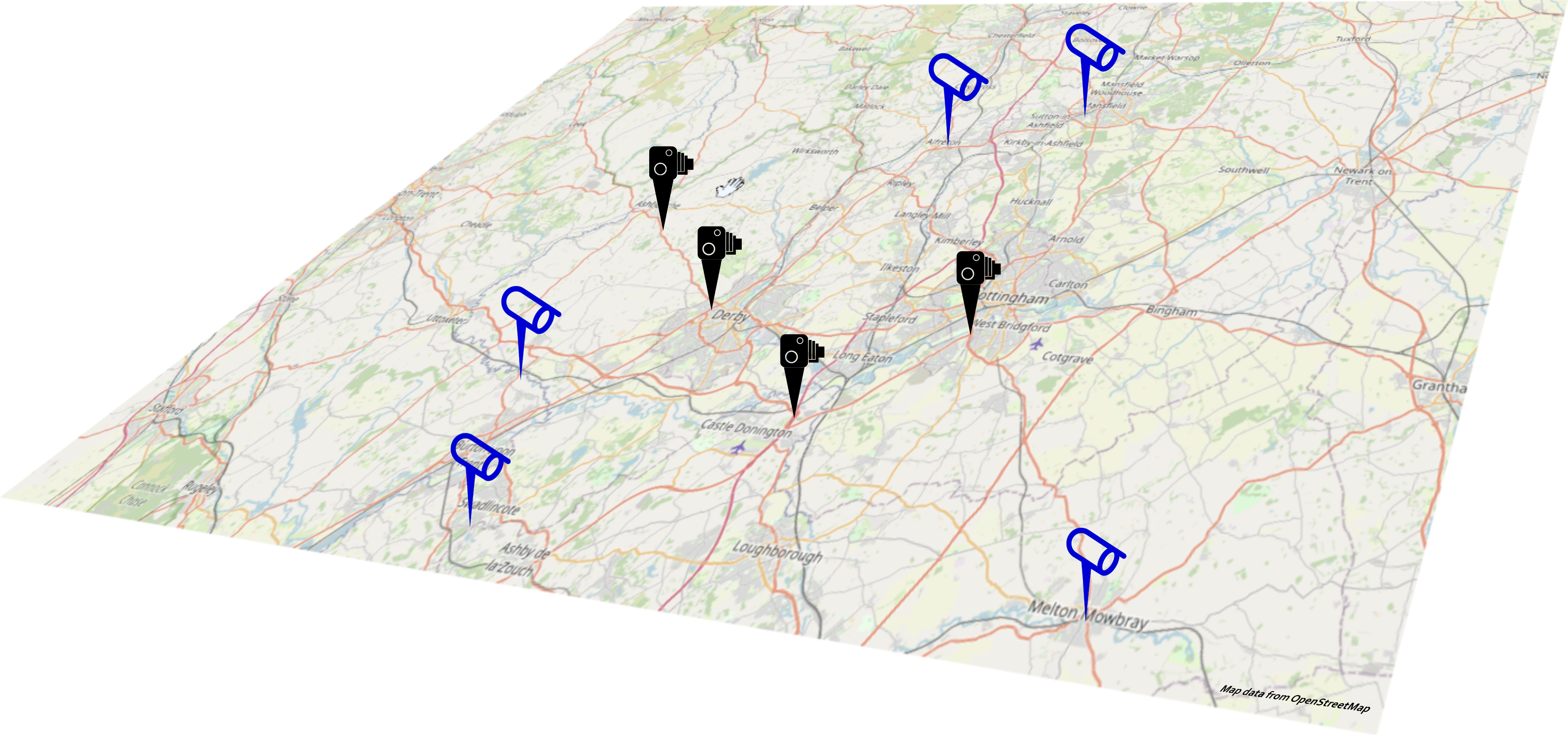
ANPR (Automatic Number Plate Recognition) data and CCTV recordings can also be used to review the movements of the missing person— and others—to provide possible further insights.
Financial transactions, including credit and debit card use, can provide further clues to the missing person’s whereabouts, movements, deviations from routine, possible motivations and potential next actions.
In addition, new information on possible sightings and locations with a connection to the missing person may emerge.
Painting a complete and increasingly detailed picture
With each new piece of intelligence data the search picture takes on more detail, more tones between light and shade, more subtle nuances, and greater sharpness.
Thankfully, any or all of this data, where deemed to be relevant, can be imported into Search-PRAS to help paint a complete picture that will better inform critical decisions as the search progresses. Such new information can be vital to focusing limited resources, as well as re-assessing earlier decisions.
So, with Search-PRAS you don’t just get an integrated, highly automated ‘best of the best’ solution that combines planning, 2D and 3D mapping, aerial photography, visualisation and business process. You also get the flexibility to import key data insights to constantly improve and sharpen the search picture.
To understand how vital intelligence data and key insights all come together in Search-PRAS to help resolve even the most complex missing person cases, you really need to experience the software for yourself.
Arrange a remote demo now
Call +44 (0)1794 834750 or email enquiries@cunningrunning.co.uk now for an initial chat and to arrange a Search-PRAS demo via a Teams call with one of our search professionals. Or Make an Appointment.
Stay on top of the developing search story…
The above article is one of an extended series of articles on search challenges and issues for police forces.
To receive notification when each article goes live, please follow the Cunning Running company page on LinkedIn, or the LinkedIn pages of John Overend or Phil Cowell.
Previous articles in this missing persons search series:
Missing persons search in the digital age: ready for your ‘Eureka moment’?
Article 1:
Ensure the excellence of your force’s search capability
Article 2:
Rapidly plan optimised searches in the office, then execute with maximum efficiency in the field
Article 3:
Compress critical timelines in missing person search operations
Article 4:
Focus use of resources on priority locations in missing person search operations
Article 5:
Audit of decision rationale in missing person searches—why it’s critical for all stakeholders
Article 6:
Leverage and enhance your use of existing geospatial assets in missing person searches
Article 7:
Stay on top of evolving missing person searches—and replan quickly
Article 8:
How to achieve rapid focus on the most likely areas, before the MISPER search area widens